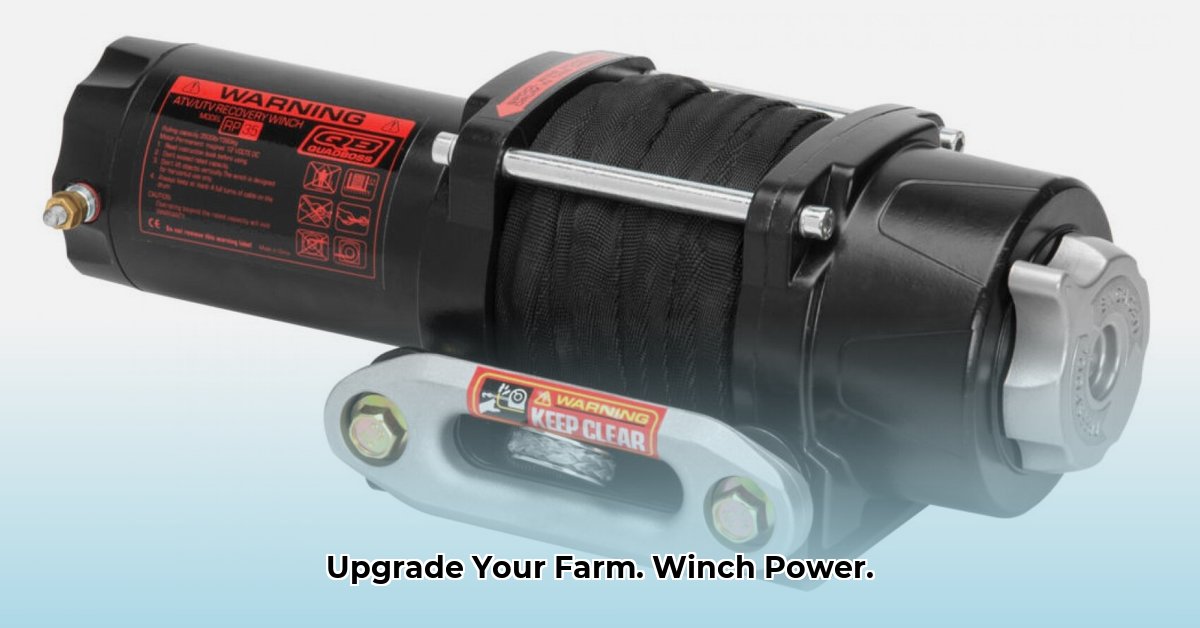
Let's face it: farming is hard work. But what if you could make some of the toughest jobs easier, safer, and more environmentally friendly? A Tractor Supply ATV winch can be a game-changer, significantly boosting both efficiency and sustainability on your farm. This comprehensive guide walks you through choosing the right winch, installing it safely, using it effectively, and maintaining it for long-term performance, all within the context of sustainable agricultural practices. For more ATV winch options, check out this helpful resource.
Choosing Your Perfect Tractor Supply ATV Winch: A Smart Investment
Selecting the right ATV winch isn't about grabbing the first one you see. The ideal choice hinges on your specific needs. What's the heaviest load you anticipate hauling? Will you be moving a few hundred pounds of compost, or a full tank of water for irrigation? The winch's pulling capacity (measured in pounds) is paramount. A higher capacity offers greater flexibility but adds weight and cost to your ATV. Balancing your needs with your budget is key.
Consider features too. Remote controls offer safer operation from a distance, while different braking systems and cable materials provide varying levels of performance and durability. Compare models directly on the Tractor Supply website 1, meticulously checking customer reviews for real-world insights into reliability and performance. Pay close attention to the warranty—a robust warranty reflects the manufacturer's confidence in their product. Don't skimp on quality; a reliable winch is a long-term investment in your farm's efficiency. Are you maximizing your investment by considering all factors before purchasing?
Installing Your Winch: A Step-by-Step Guide to Safety
Improper installation is a recipe for disaster. Always consult your winch's manual – every model is unique, and the manual provides crucial, specific instructions. However, general safety guidelines remain consistent:
Identify the Mounting Point: Select a sturdy point on your ATV's frame capable of withstanding the winch's considerable pulling force. Consult your ATV's manual for approved mounting locations. Avoid weak points; a poorly secured winch is a significant hazard.
Secure Mounting: Use the provided hardware and ensure everything is tightly fastened. High-quality bolts are essential. Loose bolts can lead to catastrophic failure.
Wiring the Winch: Connect the winch to your ATV's battery using appropriately sized wiring and a fuse. Improper wiring can cause a fire or damage your ATV's electrical system. Seek professional help if you’re not comfortable with electrical work.
Initial Test Run: Before handling heavy loads, conduct a test run with a light weight to check for functionality and familiarize yourself with the winch's operation. This minimizes risks and allows for early problem detection.
Safe Operation Techniques: Preventing Accidents
Safe operation is as crucial as correct installation. Safety must always be your top priority:
Wear Protective Gear: Always wear gloves, eye protection, and sturdy boots. This protects against potential hazards like flying debris or pinched fingers. Is your safety gear up to the task?
Utilize a Spotter: Never operate the winch alone. A spotter guides the load, identifies obstacles, and ensures overall safety. A second pair of eyes is invaluable, significantly reducing risks.
Secure Anchor Points: A stable anchor point is vital. A weak anchor can lead to winch failure or serious injury. Choose a robust anchor point capable of handling the winch’s pulling power, using heavy-duty straps or chains for added security.
Smart Snatch Block Use: A snatch block redirects the cable's pull, doubling its effective force. This allows you to lift heavier loads with less strain on the winch cable and other equipment. Is a snatch block in your toolbox?
Master Your Brakes: Understand your winch’s braking system. Knowing how it functions in different scenarios is critical for safety and control.
Maintaining Your Winch: Prolonging its Lifespan
Regular maintenance extends your winch's lifespan. Preventative care saves money and prevents problems:
Post-Use Inspection: After each use, inspect the cable for fraying, damage, or wear. Replace as necessary. Regular checks are inexpensive preventative maintenance.
Lubricate Moving Parts: Lubricate moving parts as per the manufacturer’s instructions. This ensures smooth operation and prevents wear. Is your winch properly lubricated?
Proper Storage: Store the winch in a dry location to prevent corrosion and damage. Moisture is the winch’s worst enemy.
Sustainable Farming Applications: Real-World Examples
The true value of a Tractor Supply ATV winch becomes apparent in its practical sustainable agriculture applications. It's more than a tool; it's a partner in efficient, environmentally conscious farming.
Moving Compost Piles: Reduces physical strain, improves aeration, and minimizes fuel consumption compared to tractors.
Hauling Water Tanks: Efficiently moves water for irrigation, reducing fuel consumption and water waste compared to traditional methods.
Livestock Management: Gently guides animals, preventing stress and minimizing land damage in sensitive areas.
Removing Fallen Trees: Enhances eco-friendly tree removal in small-scale forestry operations, facilitating sustainable lumber reclamation and waste reduction.
Fencing and Land Improvements: Assists in moving heavy materials, improving fencing efficiency and land management.
By incorporating a Tractor Supply ATV winch into your farming operations, you're investing in a more efficient, sustainable, and safer future for your farm. Remember, prioritizing safety and following best practices ensures long-term reliable performance and environmental stewardship.